Blog Posts

Matti’s Story

“I have had suspicions that you might have Keratoconus in your left eye”

In the early 1990s I went to see my optometrist back home in Finland for my annual check up. I had noticed that sometimes the correction with just glasses left my eyesight especially on the left side lacking in clarity and focus. Another odd thing was that when I was reading I was always holding a book within an inch from my eyes. This was the only way I could see the letters clearly enough to read.

I always remember my reaction to this diagnosis:”Keratoconus? What on earth is that?”.

At that point it felt like everything was about to change for me and little did I know how much! I had been a patient with this particular optometrist since I was seven years old and she had always helped me with glasses etc. This though sounded like something entirely different and well, yes scary.

She told me about it and how the shape of my left cornea was growing conical and this was why my eyesight was deteriorating. She was not able to say why I had it and I most certainly had never heard about it before let alone know anyone who had it. My right eye was unaffected and has remained thankfully like that until now 30 odd years later. Later on I learned that I do have it in that eye as well, but luckily it never developed further.

I was sent to a local specialist eye store who were experts in contact lenses that same day. This was also all new to me and to be honest probably kind of scarier in a weird way than the actual diagnosis had been. I had a sort of quick overview of lenses and was told that my Keratoconus in my left eye was mild and RGPs were pretty much the only option at that point. So I was fitted with hard lenses in my eyes.

I have to say that my eyesight improved instantly and it was great to be able to see clearly once again. It took quite some time to get used to wearing them and taking care of the lenses – back in those days water was used to clean them! Something that would be a complete taboo now due to danger of infections. It does make me smile thinking back to those days. CXL was not even a thing back in those days.

Fast forward a few years and sadly progressing fast in my left eye. After further appointments, cornea transplant was the only option available and I was referred to the Helsinki University Hospital for the operation which eventually took place in 1996. This was quite scary and in those days the internet was still new and getting information about this was really tricky. There were some discussion forums and websites in existence and I remember trying to find as much information I possibly could prior to the operation.

My life changed entirely thanks to get gift of sight to a donor in Denmark – yes, I am 1% Danish now! Healing took quite some time, but my eyesight got better gradually and in the end I only needed correction with glasses. At that point I had moved to the UK and had to fly occasionally to some final appointments back home in Finland.

My graft has been a true success story – 27 years and still going strong!! I dont even need steroids or other eye drops anymore. Sadly though things have not been completely plain sailing and roughly two years ago my eyesight started getting blurrier with glasses in my left

eye. I went to my optician and was told that they were no longer able to help me as I had developed scarring in my graft. This was a shock to the system and while waiting for the referral and eventually appointment at the cornea clinic at my local hospital I was quite miserable as I was not not able to see well. Working with screens became very tricky, but thankfully I did get occupational glasses which helped a lot with this problem. Sadly my appointment got rescheduled a few times and the wait was fairly long. This is why I had occupational glasses prescribed.

Eventually the appointment arrived and of course it felt anxious waiting to hear if and how they could help me to see better again. I was given two options at this point – either keratoplasty to remove scarring with laser or to start using special contact lenses.Due to risk with keratoplasty I was referred to the contact lens clinic at the hospital. It took three months to be seen, I am now wearing a mini scleral in my left eye and RGP in my right one. My vision is great and I can wear the lenses comfortably about 14 hours daily. Fitting process has been long and currently I am on my fifth pair and very near final fit.

I am so grateful for the NHS and being able to see crystal clear again. Keratoconus certainly can be a tough one to deal with especially as it is not that well known and more awareness is needed for sure. It can be really scary and cause anxiety, but with right information and most importantly professional care it can be much more manageable with a good eyesight. Everyone is different of course, but I am happy to say that I have had the gift of eyesight now twice in my life. There is always hope!

To see other member Stories – Click here
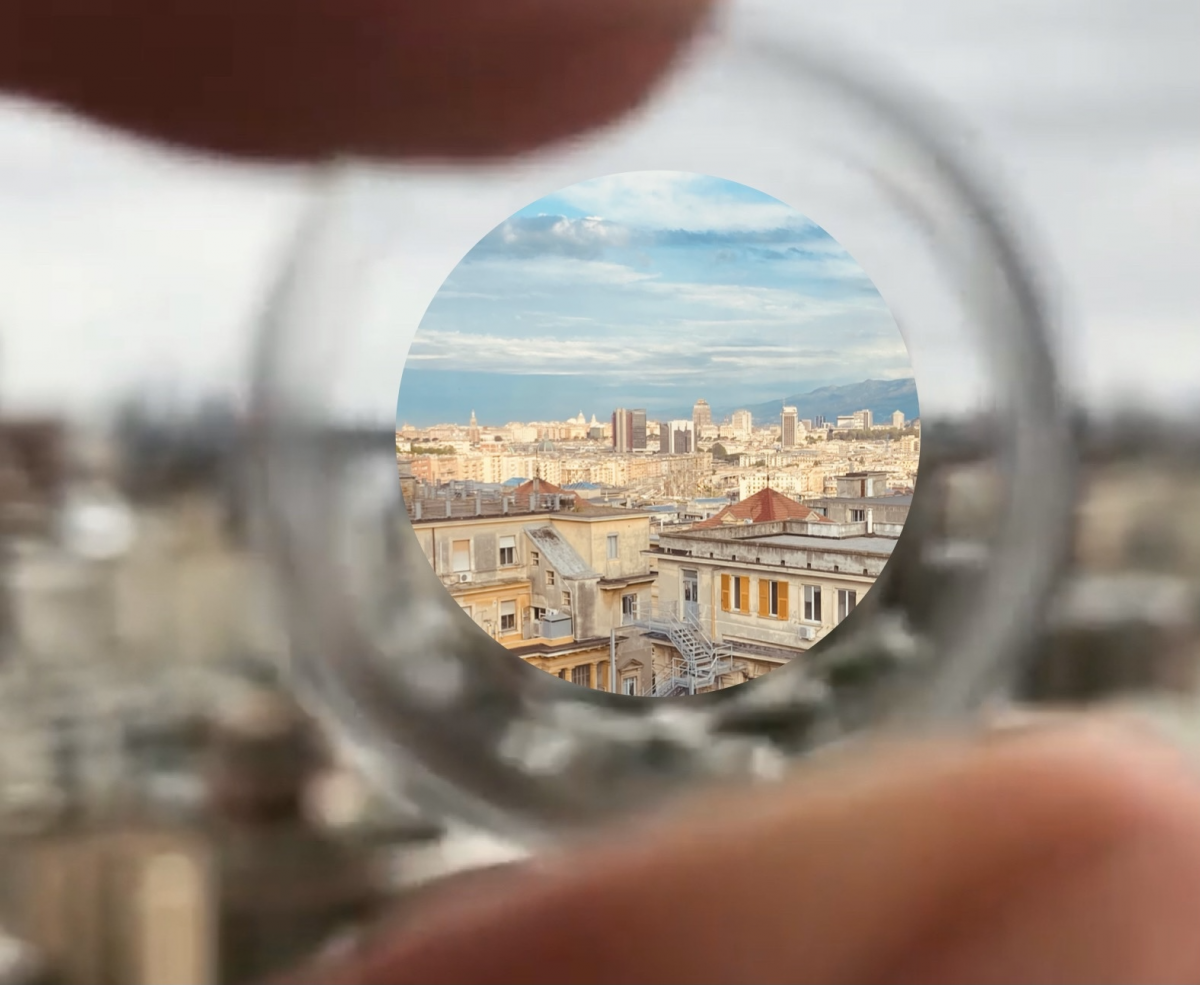
2021 Photo Contest Winners

We would like to thank our friends at the National Keratoconus Foundation in America and Keratoconus Australia for organising this competition. Congratulations to our own Ashley Winter for his winning entry.

You can see all the winning entries here: 2021 PHOTO CONTEST WINNERS

Featured image:

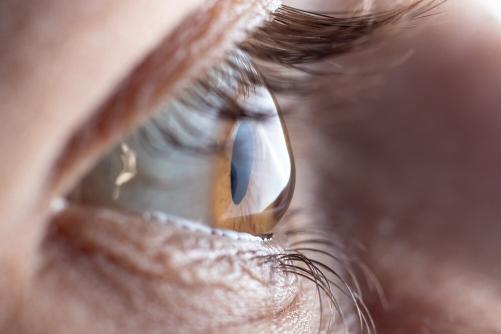
“Visual aids are beneficial for my patients in everyday life to see a more defined world.“ Chiara (Italy)

Talk by Howard Maile

At our previous Zoom coffee morning, we were treated to an excellent talk by Howard Mailes, a PhD candidate at UCL. He was talking about his research into using artificial intelligence to assist with the initial diagnosis of Keratoconus, and detecting progression.

Here is a recording of that talk.

The talk is also available on our Youtube channel

We hope you will find it interesting.

Cross Linking in Wales

For the past few years our group has been working with health professionals in Wales where until now, apart from very exceptional cases, it has not been possible to have Cross Linking (CXL) performed by the National Health Service. However, at last we have some good news to report. Crosslinking cross-linking CXL

Health Technology Wales has just issued revised guidance for the use of CXL. Their original report on the topic in 2018 stated that there was insufficient evidence(!) for CXL to be used by the NHS in Wales. The revised guidance now states –

“The evidence supports the routine adoption of corneal cross-linking (CXL) for children and adults with progressive keratoconus. Compared to standard care, CXL slows disease progression and may improve visual acuity. It may also reduce or delay the need for corneal transplantation.
Economic modelling suggests that CXL is cost effective on the basis of an assumed sustained clinical benefit for at least 14 years.”

This now needs to translate into CXL being offered in Welsh hospitals (at the moment, only Singleton Hospital in Swansea does) and that is a decision for the Welsh government. Let’s hope that follows swiftly!
You can read the full guidance (which includes a submission from the Keratoconus Group) …Here

Update from Anne Klepacz-

I have now had some feedback from my contact at HTW –


“Thank you so much for your contributions to this appraisal – our appraisal panel were particularly moved by the testimony provided from the patient group and have asked me to pass on their thanks. I think this is such a great example of how important this work of engagement with patients and groups such as yourselves is for health technology assessments.”

So I in turn would like to thank all our members and forum users who have talked and posted about their KC experience and more recently their CXL experience. Without your voices, we couldn’t have contributed to the review (it’s just a shame that we weren’t consulted back in 2018!)
You’ll find our submission right at the end of the report, in Appendix 4.

Corneal cross-linking is effective in treating young keratoconus patients

clinical trial in 60 keratoconus patients aged 10-16 years old, most of which were based at the NIHR Clinical Research Facility at Moorfields Eye Hospital, found that a treatment for keratoconus, known as corneal cross linking, was effective at stopping its progression in young patients.

We shall be hosting a presentation of the results of this trial on 9th October 2021, details to follow.

Keratoconus is an eye condition where the normally round, dome-shaped, clear front window of the eye (cornea) progressively thins, causing a bulge to develop. This eventually impairs the ability of the eye to focus properly, potentially causing progressively worsening vision.

It is known that corneal cross-linking treatment can halt keratoconus progression and stabilise vision in adults, but until now we didn’t know the effectiveness of this treatment in young patients. This is particularly important as keratoconus is known to progress faster when the onset is in childhood and early teen years. The results of this study show that treating these younger keratoconus patients with corneal crosslinking is effective in arresting the progression of their disease. The clinical trial results represent evidence previously unavailable which strengthens the cases for making cross-linking available throughout the UK, which at present it is not.

A patient, Anne Klepacz who was the lay representative on the study, through her role as trustee of the Keratoconus Group charity said: “It is very exciting to have the results of this study, giving hard evidence of the effectiveness of corneal crosslinking in young people, and providing reassurance and clarity for both parents and young people with keratoconus. We hope the findings will result in crosslinking becoming widely available throughout the UK.”

Frank Larkin, consultant ophthalmologist at Moorfields Eye Hospital, said: “Our findings suggest that corneal crosslinking should be considered as the first line treatment in progressive keratoconus in young patients. It will be interesting to see the longer term impact of this treatment for these patients and if it means the patients won’t need to wear contact lenses or have a corneal transplantation in later life.”

This post was copied from the Moorfields website

To read the technical details of the Keralink trial click – here

Genetic study uncovers hidden pieces of the keratoconus puzzle

Many of our members have been following this study. It has been carried out University College London (UCL), Moorfields, Kings College London and other national and international collaborators and is aimed to investigate the key unsolved questions surrounding keratoconus. Indeed quite a few of our members took part in the genetic study and Stephen Tuft of UCL has thanked the KC Group for its support. You may remember Dr Alison Hardcastle gave an excellent presentation of their findings at our 2019 AGM as reported in our Summer newsletter that year.

The good news is that the latest results from this project have now been published and these are summarised in the the Moorfields Press Release –here

For those with a scientific bent, you can read the full 13 page technical paper – here

David’s CXL Story

In December 2020 I underwent cross linking at Birmingham Midland Eye Centre. The procedure was on both of my eyes and I had the operation under general anaesthetic. I am writing this 6 weeks after the operation, so it is all fairly fresh in my memory.

Me and Signing Up To Cross Linking

I was diagnosed with KC as a teenager over 10 years ago. As a teenage boy and then someone entering their early twenties at university, I didn’t want to hear or talk about KC. It’s only in recent years that I have made more of an effort to look after my eyes. I had heard murmurings about cross linking over the years, but it was never something I had considered having done. It was only when I went for my last routine scan of my eyes in November 2020, and was told my condition had deteriorated again since the previous scan, did I decide to sign the forms and join the waiting list for cross linking. I only signed them under one condition however – I must be put to sleep for it. Having heard the consultant talk about the process of cross linking, it sounded like my worst nightmare. No chance could I have that done whilst awake!! I’m pretty sensitive about my eyes at the best of times, so no way was someone scraping a layer off of my eyes with me awake! I was told choosing general anaesthetic would increase my waiting time for the op, and that combined with the Covid situation, I was looking at a lengthy wait.

2 or 3 weeks had passed since being put on the waiting list for cross linking. I wanted to let my work know that I needed time for the operation and I wanted to give them a heads up of when this may be, so I randomly called up BMEC to see if they could give me an estimated date of my op. I was sat there thinking they wouldn’t be able to give me a date, or they’d say Spring/Summer 2021. The response was ‘can you come in December 29th?’ My response was ‘wait, you mean December this year?? In 2 weeks’ time??’ I must have gotten very fortunate and booked myself in somebody else’s cancellation. 

The Operation and Recuperating

In these Covid times, I had to self-isolate 2 weeks before the operation. A few days before going to the hospital I had to take a Covid test – that wasn’t a pleasant way to start Christmas Eve! I also had my temperature regularly checked whilst at the hospital. All was safe. 

As for the operation itself, I cannot tell you anything about the experience. I have heard various stories from people who have had cross linking under local anaesthetic, and I have not heard any horror stories. It just sounds a little uncomfortable. It’s all good me saying that in hindsight though, I am very happy with my decision of general anaesthetic.

When I came around after the procedure, my eyes were in a fair bit of pain. I had read someone say the pain was like gravel being stuck in your eyes, I can probably agree with that. Hot gravel.

Having had general anaesthetic, you need to eat something and go to the loo before you can be discharged. My Dad then picked me up and took me home .I went into my room, or cave as it was named due to the darkness inside, and more or less stayed there for 5 days. That’s probably how long it took for the pain to go from my eyes. I kept my eyes closed throughout the 5 days and took my eye drops given to me by the hospital four times a day – anti-inflammatories, anti-biotics and steroid drops. It was a bit difficult at the start to put in the drops – my eyes were sticking closed so it felt wrong/uncomfortable to open them for eye drops. It got better as the days went on. I got given an eye mask at the hospital to wear for sleeping (so you don’t rub your eyes in the night). The pain got less and less over the 5 days, until I finally started to open my eyes for extended periods of time, and then the next challenge began – adjusting to light. Having been through an operation and been closed in a dark room for 5 days, it took a while for my eyes to get used to any kind of light in the house. I built it up slowly, day by day, and bit by bit I could watch TV for longer/look at my phone more often/be in a room with lights on. 

After two weeks I was only on the steroid drops twice a day, as these were still needed for a further two weeks. I went to the hospital for a post op check and was told my eyes were OK but still recovering. I originally took two weeks off of work as I had been told I could potentially wear my contact lenses again at this point after the operation. But the hospital signed me off for another two weeks so my eyes could further recover. I don’t have glasses I can wear, so me trying to work without lenses would have definitely been a strain to say the least! Thankfully my work were very understanding about the situation.

Now and After

I have been back at work for two weeks now and more or less returned back to normal life. The contact lenses I am wearing are those fitted for me from before the operation. There are good days and bad days with them at the moment. There’s no guarantee the lenses will give you the same level of vision/ comfort as before the op  And there is no point going to get any more fitted as your eyes are still stabilising 6-9 months after cross linking. I believe this is the same for glasses wearers. So the next steps for me are to wait for the next post-op appointment in March, and then see the contact lens people in June for a contact lens fitting for my (hopefully by then) stable eyes.

I don’t think I’m currently in a position to comment on the success of the cross linking procedure – I will have to wait a while yet. It’s important to remind myself that it’s a long term benefit, no matter how impatient I’m feeling!

Tips

  • Have entertainment to hand: download all the audiobooks/podcasts you can find! Between those and the radio, there’s not much else to do when you’re in the early stages of recovery. If you have an Alexa/Google Nest type thing which has voice control, that’s a bonus!
  • Know the layout of your surroundings: you probably think you know the way around your room with your eyes closed – well recovery is the perfect time to test that theory! Make sure there aren’t any hazards in the way and that things you may need to access are in easy places.
  • Talk to people – make sure you’re still connecting with people! I was sending voice messages to friends/family over the new year. In particular it was helpful to communicate with someone I met at the West Midlands KC Group. She had had cross linking done a few years ago, so getting her insight/tips were very useful.

Read other Member Stories on our on our Blog – Here

Sight and Sound Technology

We would like to thank Sight and Sound for hosting the following webinar for us specifically tailored towards keratoconus. The webinar looks at four scenarios taking people at different stages of their lives and demonstrates how technology can support them. The webinar is a mix of real time demonstrations and presentations showing the technology in use.

You can get more information by visiting their website or contacting Glenn Tookey at: glenn.tookey@sightandsound.co.uk or by phone on 01604 798070 or 07776141516.

You can also discuss the recommended products with other members of the KC Group on our Forum.