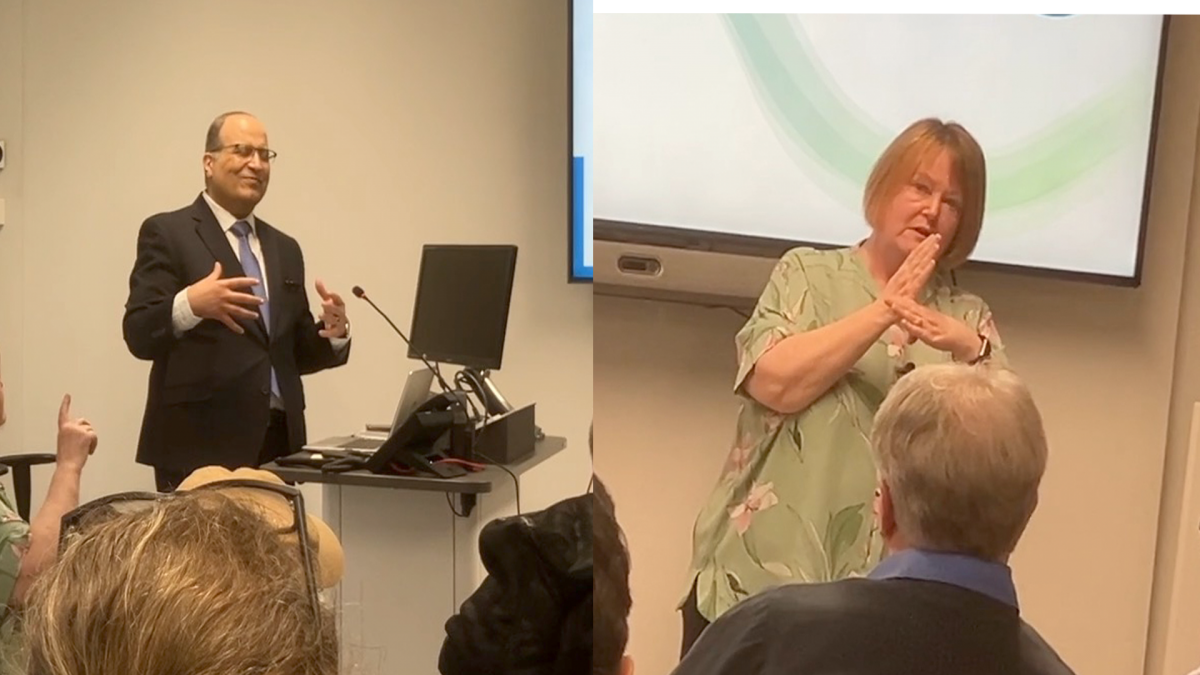
At our AGM and Speaker meeting both Dr Abass and optometrist Lynn White, carefully explained the progress of their work to find a solution for those of us who have to cope with not wearing contact lenses for a period of time; yet still need better vision for dealing with basic tasks. Both Ahmed and Lynn are convinced that with the advance of technology, spectacles can be manufactured to take account of a non-orthogonal angle of astigmatism. Indeed, some who have worn the spectacles in laboratory conditions, do not want to give them back.
In this clip, Dr Abass explained how he was able to interpret the high-resolution results without relying on the software provided by modern topography machines. He noticed that astigmatism is not always orthogonal, which led to his research project to find a better solution for keratoconus.
Here Lynn White explains the wider implications of Dr Abass’ research beyond keratoconus.
More details will follow in the next newsletter. To see a fuller summary of the talk click here
There is still a long way to go but results to date are promising.
Here is the press release from Liverpool University.
In a recent KC patient group meeting, Dr Ahmed Abass from the University of Liverpool unveiled exciting research into a new type of spectacle lens designed to help those living with keratoconus; a progressive eye condition that causes thinning and irregular shaping of the cornea.
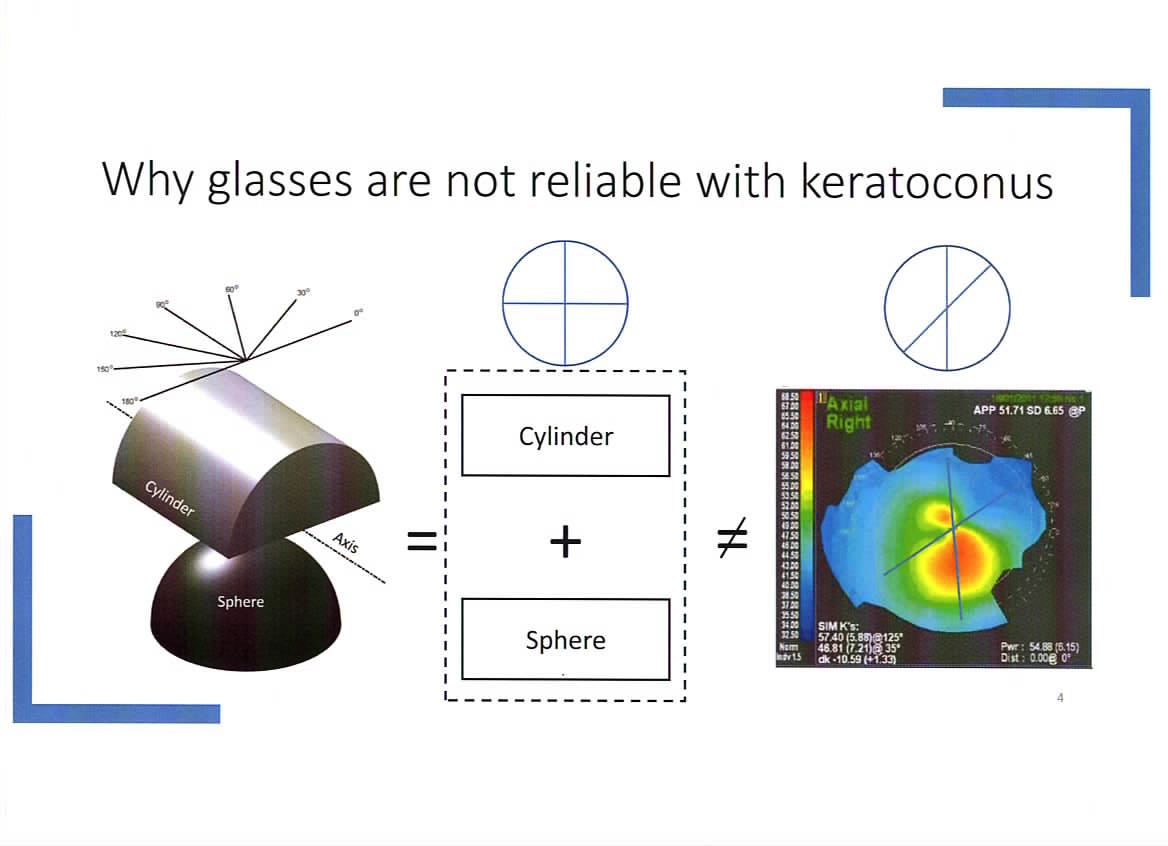
Traditional glasses often fall short in correcting vision for keratoconus patients due to a phenomenon called non-orthogonal astigmatism. However, Dr Abass and his team, supported by Fight for Sight and the UK Keratoconus Self-Help and Support Association, have been exploring an innovative lens design that targets this issue directly.
The results are encouraging. In this pilot study, many participants experienced clearer vision, reduced ghosting, and sharper letter recognition with these specially designed lenses.
“This is the first study of its kind,” Dr Abass said. “We’ve shown that the idea works. Now we need to focus on scaling it up, finding ways to mass produce these lenses and test them on a larger group.”
As the project looks towards the next stage, development and commercialisation, there may be exciting opportunities for those in the optical or medical device industries to get involved. Anyone interested in collaborating with the University of Liverpool or learning more is welcome to contact Dr Abass at a.abass@liverpool.ac.uk. or connect via linkedin
It is a small but meaningful step forward, offering new possibilities for those seeking alternatives to contact lenses or invasive procedures.
Investigator Initiated, Prospective Study of Xenia Corneal Lenticule
This information is provided directly by researchers and we recognise that it isn’t always easy to understand. We are working with researchers to improve the accessibility of this information.
Cornea ectatic conditions such as keratoconus and post-LASIK (Laser In situ Keratomileusis) ectasia are disorders of the eye that are notorious for its uncontrolled progression over time, leading to loss of vision. There are valuable treatment options for controlling disease progression in mild to moderate stages of such disease. However in advanced cases and / or when contact lenses cannot be worn, surgery remains the only treatment option to rehabilitate vision. Most treatment options are highly invasive and represent significant risks. This study evaluates a novel corneal implant, Gebauer™ Lenticule to treat severe keratoconus or post-LASIK ectasia. This implant is derived from porcine collagen and intended for intra-stromal insertion. The Gebauer™ Lenticule is expected to improve the stability of the cornea while not impairing the vision. The procedure is an additive procedure after other treatment options have been exhausted. The procedure is reversible with removal of the implant (in the unexpected case of an adverse reaction), and vision may be restored to baseline.
The purpose of this study is to evaluate how well the implant is tolerated, it’s safety profile, and how effective this new treatment option is in the treatment of keratoconus or post-LASIK ectasia.
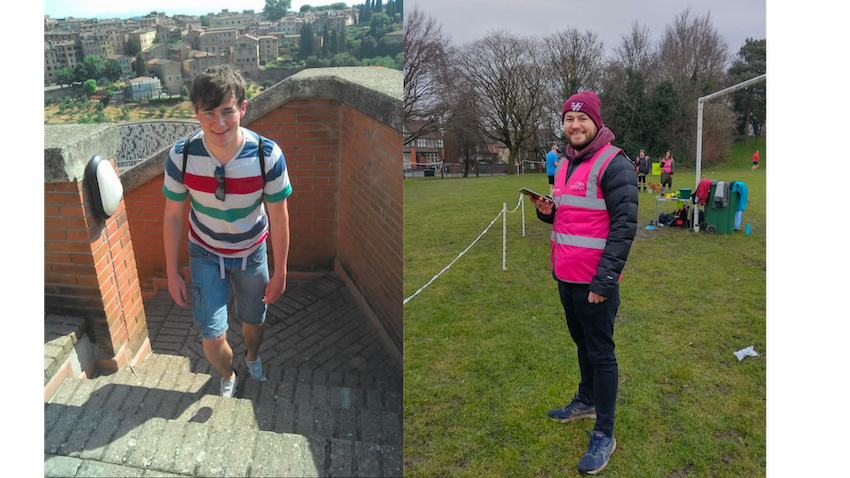
Around the age of 15/16 I was diagnosed with keratoconus. I was a glasses wearer, but I was really struggling to see anything in much detail. Trying to see the board at school was tough, even close up reading became a challenge. I spent most of my GCSE years squinting, much to my embarrassment. None of my friends had the same difficulties that I had. My Mom requested large print for my exams, and although at the time I felt pretty mortified by it, in hindsight the larger font and extra time was a big help – thank you Mom…..
That Summer, I was given rigid gas permeable lenses to try. I’ve always been very sensitive about anyone going near my eyes (even now at the age of 30, during a regular check up at the eye hospital it can be a challenge!), so someone putting these uncomfortable, foreign objects in my eyes was quite the ordeal. Especially considering the way I was taught to remove them was with a mini plunger – terrifying! Regardless, due to the steep improvement in vision with these RGP lenses, I persevered, and eventually got used to them. I even got used to wearing the single lens if one of my eyes was giving me some grief. My vision had improved and my confidence was up.
However, it wasn’t all good times in the coming years. I learnt the hard way that rubbing your eyes can make your vision worse (I haven’t done that now for 13 years and counting…..), I was given new RGP lenses which would prioritise comfort rather than sight, even having to change to piggyback lenses in one of my eyes as it couldn’t cope with just the RGP anymore, and I was told on a few occasions that my condition was worsening of its own accord. The lenses themselves could be quite uncomfortable at times, and the slightest speck of dust could often send me into full on tears! And all this time being a young adult trying to navigate A-Levels and then university, I didn’t really listen to any advice I was being given, and I just got frustrated and angry at my hospital appointments. I wonder if the feeling may have been mutual from the hospital however, as I was constantly asking for replacement contact lenses due to them flicking out. Unfortunately when you’re experiencing the uni lifestyle of bars and nightclubs, the dehydration from a night out means that all I needed is a stray hand in and around my eye to make my contact lens flick out. There goes another payment (sorry Mom!) and many weeks waiting for the new lens to arrive…..
Fast forward to adult life in a full time employment at the age of 25 ,and I passed my driving test. I was always nervous about driving – I didn’t always have confidence in my sight (regardless of whether I could read the required line on the eye chart or not) and thought that it might affect my driving ability. After a few years of having lessons on and off, I finally booked a test. Weirdly the thing I was most nervous about on the day wasn’t actually the driving, but reading the reg plate in the car park!
I feel that this is the point where my outlook changed. I could drive, and once I got my first car, I suddenly had way more opportunities in my life that were not there previously, in particular for work and travel. Now that I had this freedom, I really did not want to lose it. I started to take more care in my day-to-day life – less wear time with the contact lenses where possible, more time and care with cleaning and storing the lenses, I even started to wear Edgar Davids-esque protective goggles for sport. I didn’t care if I got the odd comment – I needed good eye health now more than ever.
During a regular eye check-up at the hospital, I was told once again that my condition had deteriorated, and that once again, I should undergo cross linking to stop the condition from getting any worse. This operation is something that I had been told about on a few occasions previously. However, with my lack of affection of anyone or anything going near my eyes, as well as turning a bit of a blind eye to my condition in years gone by, I had always ignored the suggestion. This time though, I felt like I had something that I wanted to preserve – my eyesight for driving. I reluctantly agreed to be put forward for cross linking (under the condition of being under general anaesthetic, you can touch my eyes but I don’t want to be awake to see it!), and to my surprise within two months I was in hospital having the operation. I have written a piece previously about this operation, link as follows:
Before my operation, I was very nervous and I felt like I needed reassurance from somewhere. For many years, my Mom had been in contact with the West Midlands Keratoconus Group, even going to a few of the meet ups in Birmingham. Although her previous suggestions for me to join had fallen on deaf ears, this time I decided to join the latest Zoom call. It was an extremely eye-opening experience. Not only was I not alone with some of my experiences, they were in fact commonplace. Finally I had met some other people who were also fed up of the question ‘why can’t you wear glasses?’ Some of the members really had some extraordinary stories to tell which dated back decades, and it quickly became clear to me that some of my own annoyances in the past needed to be put into perspective a little more. On the call there were others who had gone through the cross linking experiences, and they proved incredibly helpful to get in contact with both before and after my procedure.
Over 4 years on and I continue to join the Zoom calls and go to the in-person meets when I can. Because of the group, I have learnt about many other types of procedures/contact lenses/eyes drops/helpful practices etc which I never knew existed. Thanks to the group, I learnt about mini scleral lenses. At one of my contact lens appointments, I pushed for me to try these out. I have now been wearing mini scleral lenses for over a year, and the vision and comfort that they have given me so far has been fantastic.
At these meetings/on these Zoom calls, I hear of worried parents whose children are struggling and they don’t want to know about their condition. I find it quite humorous as the stories often parallel my own experiences, but I also will these young adults to step forward, talk about their condition and learn from others. Perhaps they also need their own eureka moment like I did when it came to protecting my vision for driving, or perhaps they can read something like my story and see that there is help out there if you ask for it.
If you have been following this topic, you would have seen our earlier posts here and here
We are pleased to report that Dr Ahmed Abass has published his paper which we are proud to have co-sponsored with Fight for Sight.
Dr Abass has kindly provided the following simplified abstract. The full paper can be read here. You can also view his other papers on his University Page here
Purpose
The study aimed to investigate whether non-orthogonal correction in spectacles would improve the visual acuity of people with keratoconus. Non-orthogonal correction is where the angle between the cylinder powers of a spectacle lens for astigmatism is less than or greater than 90 degrees. Typically, keratoconus patients have this type of astigmatism, which is why standard glasses do not work well.
Methods
The study involved 18 patients with keratoconus from an eye clinic in Liverpool. After evaluating their eye condition, 23 eyes were selected for testing, while others were excluded due to the eye having little or no keratoconus or severe dryness. Each eye was tested first with standard lenses, and then with non-orthogonal lenses. The lenses were tested with different angles until the best one was found for each person. Participants were asked to rate their vision, specifically how clear letters appeared and how much “ghosting” (double vision) they experienced with each lens type.
Results
Of the eyes tested, 61% showed improved vision with non-orthogonal lenses, 30% saw no change, and 9% saw a slight decrease in vision. Regardless of vision improvement, 87% of participants noticed clearer letters, and 79% reported less ghosting. Most of the preferred angles for the non-orthogonal lenses were between 80° and 85°. The study also showed that for many people, the non-orthogonal lenses could provide a more accurate prescription compared to regular lenses. Nearly all participants said they would be interested in trying non-orthogonal glasses.
Conclusions
The study suggests that non-orthogonal lenses could improve vision and reduce issues like ghosting for people with keratoconus. While this is a promising step toward developing better glasses for these patients, more work is needed before these lenses can be made for everyday use.
We are hoping to arrange for Dr Abass to speak at one of our future events.
It is with great sadness that we announce the death of Mike Oliver, co-founder of the Keratoconus Group, long time trustee and ex Chair of the trustees. Mike’s contribution to the creation and development of the KC Group was immense. His ideas and ambition for what it could become were an inspiration to the rest of us. It was thanks to him that what started as some meetings of KC patients in Moorfields became a national charity. It was Mike who persuaded us that, in addition to our programme of meetings for members, we should also hold a one day conference, inviting a variety of speakers. The first successful conference in London in 2001 led to (so far) nine more in London, Birmingham, Glasgow and Manchester. It was Mike who had the idea of fundraising walks for the charity with members joining as and when they could along the way. The first of these was walking the length of the Thames Path from the source to London. Mike planned the route for each day and walked the entire route (the only one of us who managed to walk every day of the fortnight)! A couple of years later he organised the equally successful Capital Ring walk. He gave generously of his time to the charity and worked tirelessly to spread awareness of keratoconus and its effects on physical and mental wellbeing. That included the last two years when he was already ill but, despite that, gave a very moving talk at our 2022 conference, you can view it – here. Perhaps it was his legal background that made him such an eloquent speaker and a great problem solver. But, of course, apart from all his achievements, we’ll remember Mike above all for his warmth and kindness, his ability to listen and empathise, his dedication to others. We will miss him hugely.
If any of his KC friends would like to attend his funeral, please contact anne@keratoconus-group.org.uk for details.
We are hugely grateful to Mario Saldanha, corneal consultant at Singleton Hospital in Swansea. With his medical student daughter Dea, he will be doing the Cardiff 10K Run on Saturday 3rd September in aid of the Keratoconus Group and to raise awareness of keratoconus and its treatment in Wales. Readers of past KC Group newsletters will know that, until recently, Wales did not fund corneal crosslinking (CXL). Mario was at the forefront of the battle to challenge this. But while the policy has now changed, lack of resources and investment in treatment means that young children and teens with Keratoconus are not receiving Cross-linking treatment on time (for young people, CXL must be offered before the vision has been significantly affected by KC and before it affects their education).
So please support Mario and his daughter and donate to his JustGiving page by clicking – here
JustGiving sends your donation straight to Keratoconus Group and automatically reclaims Gift Aid if you are a UK taxpayer, so your donation is worth even more. Please spread the word about this important cause.
At our AGM we were treated to a talk by Emma McVeigh about a new project led by Dan Ehrlich (retired Head of Optometry at Moorfields). Moorfields is funding an innovation grant harnessing advanced imaging technology and clinical data to improve the fitting of contact lenses for patients with keratoconus.
You can read the full update published on Moorfields website – here
As you can see from the Government website (Eye conditions and driving), Keratoconus has been removed from the list of notifiable conditons.
This change was made after consultation with the Association of Optometrists. You can read their announcement – Here
However, it remains sensible for drivers with KC to let their insurance company know they have keratoconus or risk a legitimate claim being disallowed.
For further background, this issue was featured on page 10 of our Spring 2023 Newsletter.
In an earlier post, we outlined how University of Liverpool biomedical engineer, Dr. Ahmed Abass, had been awarded funding from Fight for Sight and Keratoconus Group UK to develop a new type of spectacle lens that can correct irregular astigmatism for keratoconus patients.
Dr. Abass has now completed the trial and plans to publish his paper later this year and has agreed to present his findings at one of our meetings. In the meantime, he has supplied us with a simplified summary. We appreciate the work Dr. Abass is doing to lessen our dependency on contact lenses. Here is the latest summary:
Although patients with keratoconus can achieve improved visual acuity with contact lenses, it is not yet commercially possible to do so with spectacles. Visual acuity using spectacles is affected by non-orthogonal (irregular) astigmatism and High Order Aberrations, causing visual effects such as doubling and ghosting images, poor contrast and increased glare. Historically, spectacles have not been able to correct these issues. This new study investigated whether correction of non-orthogonal astigmatism could improve the visual experience of keratoconic patients. There was reason to believe this could be the case, based on a previous small study: Effect of Correcting Non-Orthogonal Astigmatism in Corneas with Novel Optical System.
This is the first study of its kind to see if correcting non-orthogonal astigmatism might reduce the visual disturbances experienced by people with keratoconus, and the results are very encouraging. It was found that 70% of eyes tested with the novel test lenses showed an improvement in visual acuity with reduced ghosting and an improvement in letter clarity.
Analysis of the results is ongoing to investigate why some subjects responded better than others, as many factors are involved. Early indications are that the cone position and the effect of high-order aberrations had a greater effect in some subjects.
This small study was designed to see if the idea had merit, and the results have been very positive. Further work now needs to be done to find ways of manufacturing such lenses and studies carried out on larger numbers of subjects.
Recently a number of our members have experienced problems when supplied with new scleral contact lenses. Such was the concern that we asked members for feedback in our Spring 2022 Newsletter.
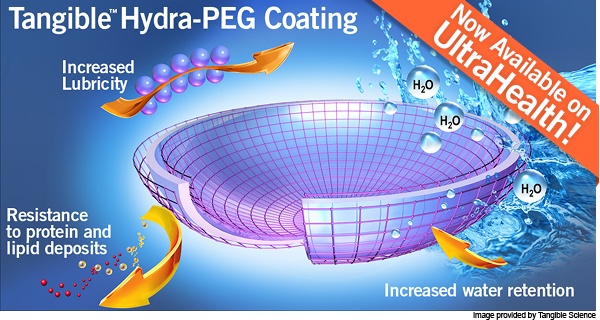
We recently hosted one of our occasional KC Coffee mornings and were fortunately joined by one of the leading optometrists in the Moorfields Contact Lens Department namely, Aneel Suri. He informed us of a new coating that can be bonded to some (but not all) hard contact lens materials. Its availability is increasing and hopefully by the year end it will be available for the majority of RGP and scleral lens materials in use in the UK.
The coating is called “Hydra-peg” and was developed by a company called Tangible Science. You may want to draw your optician’s attention to it if you are experiencing problems with lens wettability which can cause poor vision and comfort primarily in scleral lenses. It will not address any discomfort caused by ill-fitting lenses. You can read about it – here
Update – 14th April 2025
In response to a question from one of our members, we received the following answer from Martin Conway of Contamac:
As to Hydrapeg, this coating has been widely accepted by the scleral lens laboratory network, across the US and Europe.
In answer to the question “ Can lenses be re-coated?” – well in fact it is possible to strip and recoat a lens but the risk of a contaminated lens coming contact with new lenses being prepared in the laboratory make it impractical.
Labs conform to extremely tight protocols which govern how lenses and raw materials are controlled within the laboratory environment and to introduce a worn lens into that system would breach those regulations. The coating is applied in a bath which will is normally used to treat multiple lenses at a time leading to a possible contamination risk and to have separate rooms or protocol to treat or modify individual lenses is not financially viable, it would be cheaper to make a new pair of lenses! Laboratories used to offer repolishing or even power modification for GP lens wearers – they do not allow that these days for similar reasons. Worn lenses coming into a laboratory present an unacceptable contamination risk.
The Hydrapeg coating is just 35 nanometres thick and formed from a hydrophilic molecule. If it is allowed to dry out, or is mishandled in any way, then the coating will be disrupted.
Tangible Sciences have a product called Boost, which is available in the US and is designed to repair the coating and replenish the coating with regular soaking however because of the current regulatory framework in Europe, it is not available here.
I’m sorry I can’t be of more help for your member but despite the fragility of the coating, most patients who have had the coated lenses request them again when it is time for renewal.